Via Hesed and the Hesed Heart - Vía Hesed y el Corazón Hesed
Marriage is not merely a contract to be managed; it is a covenant to be lived. In a modern culture that often views marriage as a 50/50 transaction based on fleeting feelings, the Church calls us to something far deeper: a catechumenal pathway for married life. This lifelong journey of accompaniment is the vision of Via Hesed.
The Hebrew word Hesed (חֶסֶד) is one of the most profound theological terms in the entire Bible. It appears over 250 times in the Old Testament, most frequently in the Psalms, and it resists simple translation. Bible scholars have rendered it as "steadfast love," "lovingkindness," "loyal love," "unfailing love," "mercy," and "faithfulness." None of these phrases fully captures its depth. At its heart, Hesed means covenant loyalty that results in merciful action. It is not a feeling; it is a description of God's core character made visible through binding, active commitment. When God declared to Moses on Mount Sinai, "The Lord, the Lord, a God merciful and gracious, slow to anger, and abounding in steadfast love [hesed]" (Exodus 34:6), He was revealing His most fundamental nature.
Our name combines two ancient concepts: Via (the Latin and Spanish word for "The Way" or "Path") and Hesed (God's covenantal, steadfast love). Together, they form our mission: The Path of Covenant Love. When we understand that our vows are rooted in God's unbreakable commitment to us, we are freed from the fragility of the cultural "soulmate myth"—the dangerous belief that a perfect person exists by destiny, and that when things get difficult, we simply chose the wrong partner. The Via Hesed framework recognizes that true love is not a passive feeling but a daily, conscious, and radical choice.
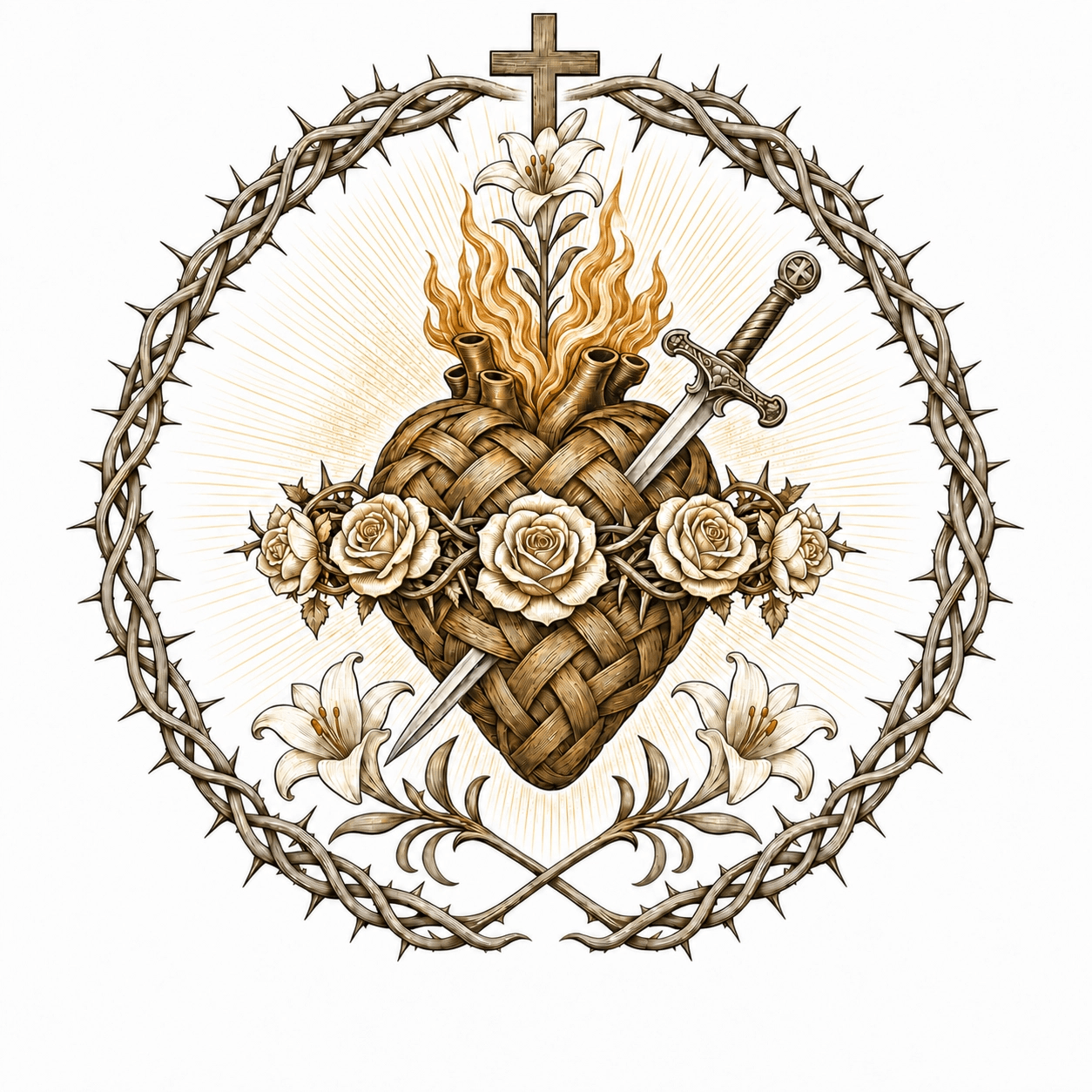
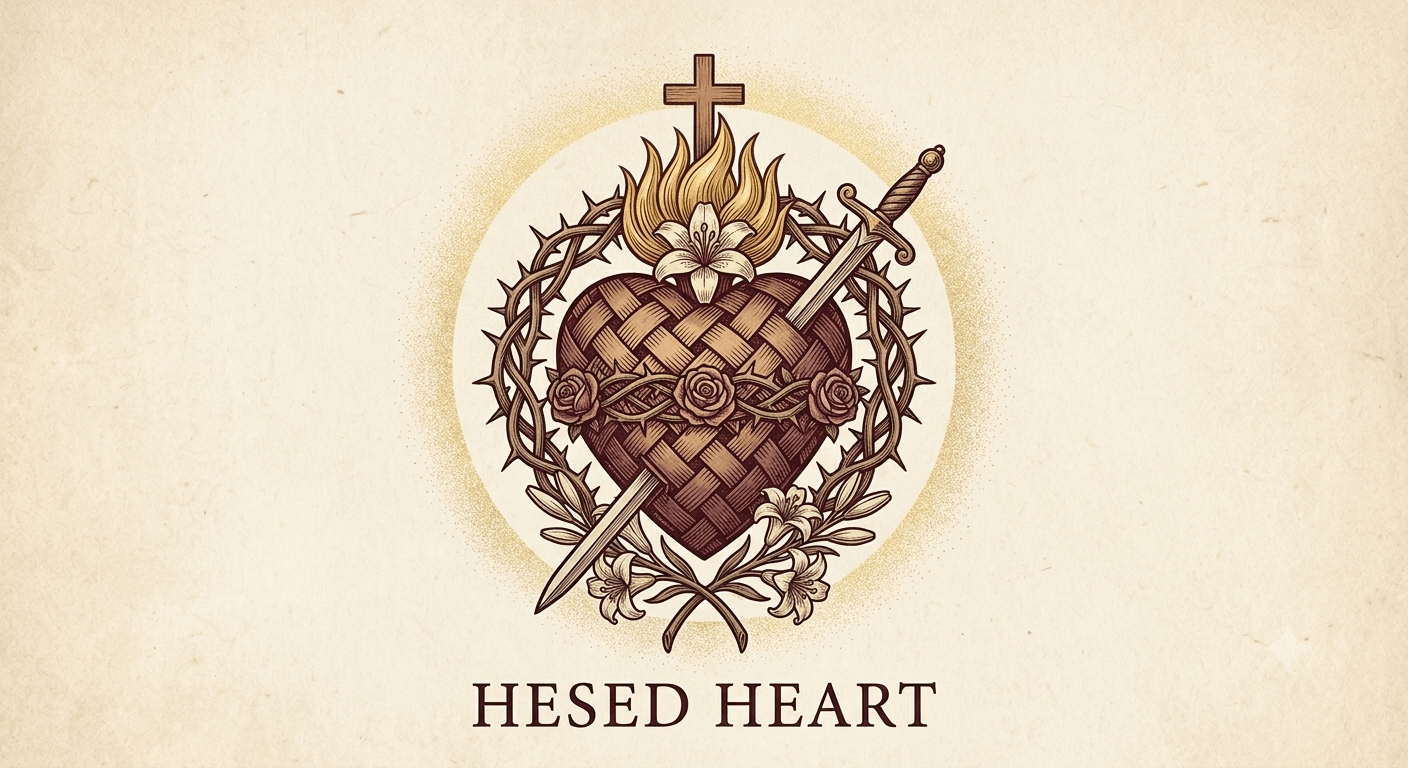
At the center of our mission is the Hesed Heart, a visual theology of this covenant. Every element of the emblem carries deep theological meaning, drawing together the Sacred Heart of Jesus, the Immaculate Heart of Mary, and the Most Chaste Heart of St. Joseph into a single, unified image.
El matrimonio no es simplemente un contrato que debe administrarse; es una alianza que debe vivirse. En una cultura moderna que a menudo ve el matrimonio como una transacción 50/50 basada en sentimientos fugaces, la Iglesia nos llama a algo mucho más profundo: un camino catecumenal para la vida matrimonial. Este viaje de acompañamiento para toda la vida es la visión de Vía Hesed.
La palabra hebrea Hesed (חֶסֶד) es uno de los términos teológicos más profundos de toda la Biblia. Aparece más de 250 veces en el Antiguo Testamento, con mayor frecuencia en los Salmos, y resiste una traducción sencilla. Los estudiosos de la Biblia la han vertido como "amor inquebrantable", "amor fiel", "misericordia" y "fidelidad". Ninguna de estas frases captura completamente su profundidad. En su esencia, Hesed significa lealtad de alianza que resulta en acción misericordiosa. No es un sentimiento; es una descripción del carácter central de Dios hecho visible a través de un compromiso activo y vinculante.
Nuestro nombre combina dos conceptos antiguos: Via (la palabra latina y española para "El Camino") y Hesed (el amor de alianza de Dios). Juntos forman nuestra misión: El Camino del Amor de Alianza. Cuando entendemos que nuestros votos están arraigados en el compromiso inquebrantable de Dios hacia nosotros, nos liberamos de la fragilidad del "mito del alma gemela" cultural y nos empoderamos para amar a nuestro cónyuge incluso en temporadas de profundo agotamiento.
En el centro de nuestra misión está el Corazón Hesed, una teología visual de esta alianza. Cada elemento del emblema lleva un profundo significado teológico, reuniendo el Sagrado Corazón de Jesús, el Corazón Inmaculado de María y el Castísimo Corazón de San José en una sola imagen unificada.

Created with ©systeme.io